


How Long Does the Yellow Fever Vaccination Last?
A detailed explanation of protection duration, travel requirements, and what you need to know across the UK Yellow fever is …
Read More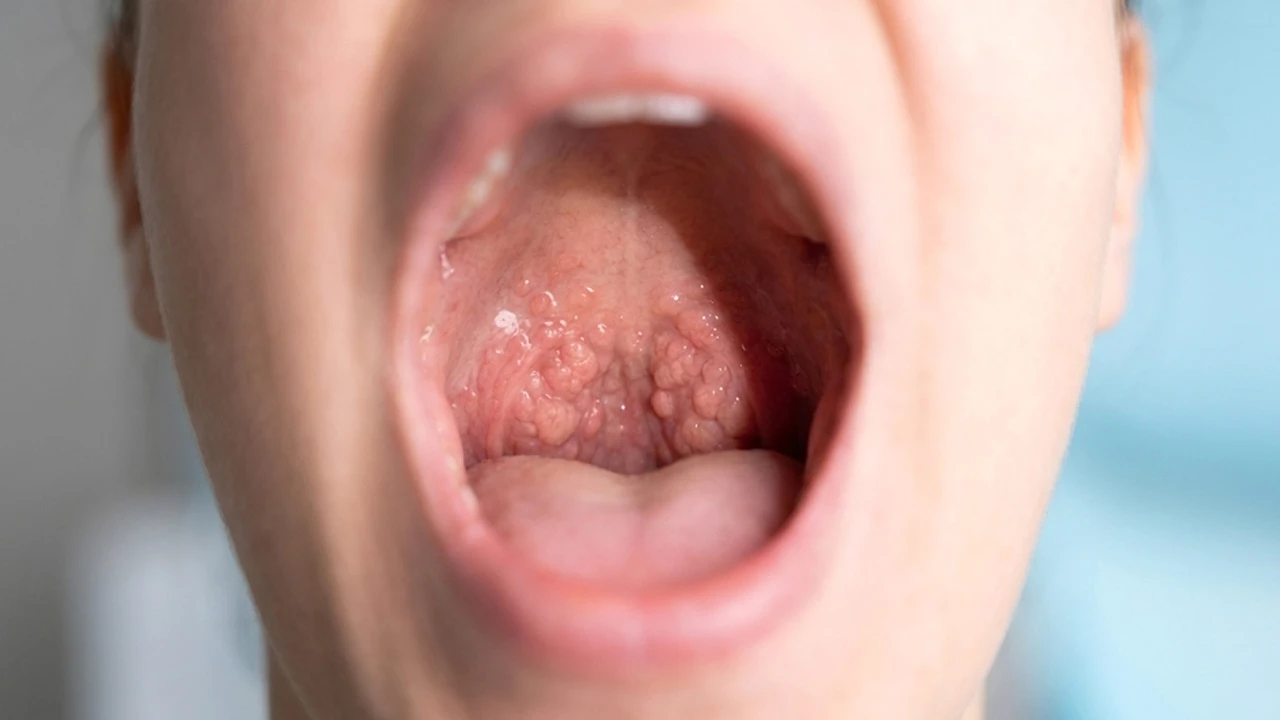
Understanding this common throat condition and what it means for your health
‘Cobblestone throat’ is a term used to describe a bumpy or raised appearance at the back of the throat. Many people notice this change when they look in the mirror while feeling unwell or experiencing throat discomfort. Although it can look concerning, cobblestone throat is usually linked to common and treatable conditions.
This blog explains what cobblestone throat is, what causes it and when medical advice should be sought.
Cobblestone throat‘ refers to swollen, raised bumps on the back of the throat. These bumps are actually enlarged lymph tissue. The lymph system helps the body fight infection, and when it becomes active, this tissue can swell, giving the throat a rough, cobblestone-like appearance.
It often develops alongside throat irritation, postnasal drip, or infections.
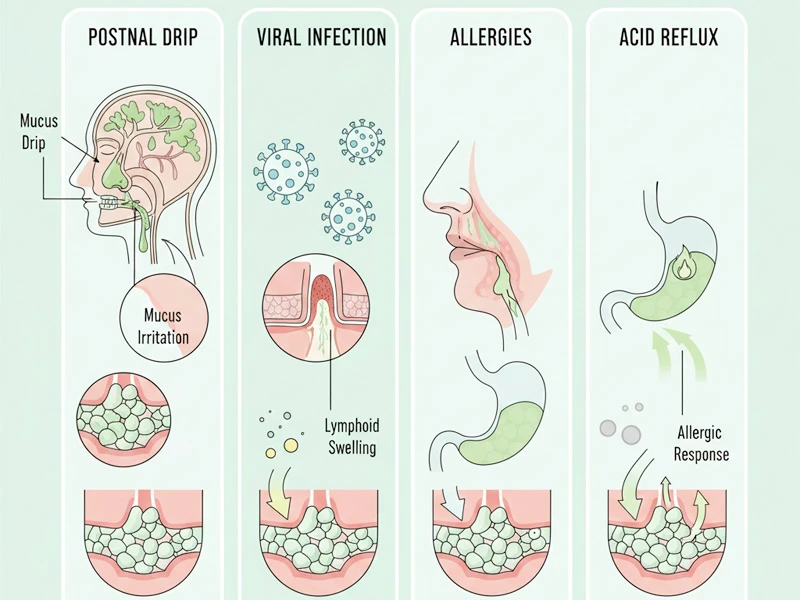
One of the most common causes is postnasal drip. This happens when mucus from the nose and sinuses continuously drips down the back of the throat. The constant irritation causes the lymph tissue to swell and become more visible.
Viral infections such as colds and flu can also trigger cobblestone throat. As the immune system responds to infection, lymph tissue in the throat becomes enlarged, leading to a bumpy appearance and sore throat symptoms.
Allergies are another frequent cause. Pollen, dust, pet dander, and other allergens can cause ongoing nasal drainage and throat irritation, which may result in cobblestone throat.
Acid reflux can also contribute. When stomach acid travels upward into the throat, it can irritate the lining and lead to inflammation and swelling of lymph tissue.
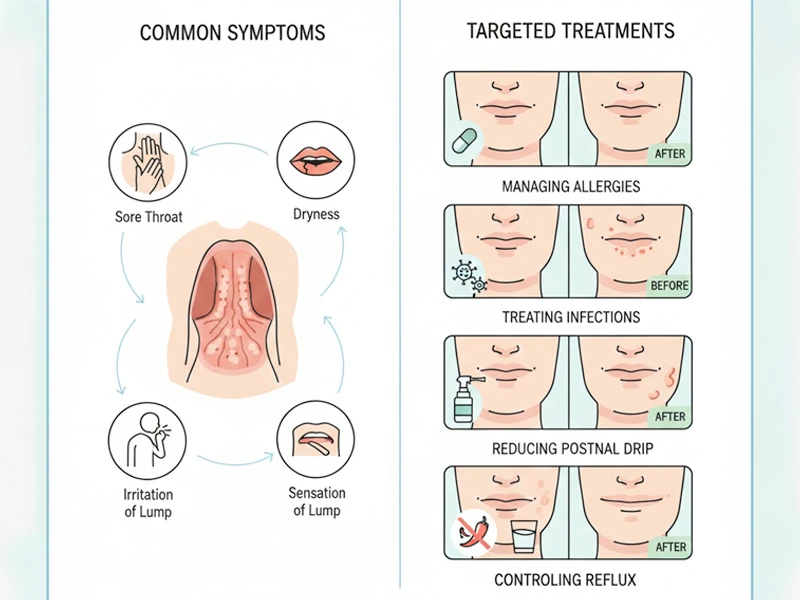
People with cobblestone throat often notice soreness, dryness, irritation, or a feeling of something stuck in the throat. Some may experience frequent throat clearing, coughing, or mild difficulty swallowing.
The discomfort usually reflects the underlying cause rather than the bumps themselves.
Cobblestone throat itself is not usually serious. However, it is a sign that something is irritating the throat. While most causes are mild, long-lasting symptoms should be assessed to rule out persistent infections, allergies, or reflux problems.
Treatment focuses on addressing the underlying cause. Managing allergies, treating infections, reducing postnasal dri,p and controlling acid reflux can all help reduce throat irritation. Once the cause improves, the swollen tissue usually settle,s and the throat returns to normal.
You should seek medical advice if symptoms last longer than two weeks or if you experience severe pain, difficulty swallowing, high fever, or unexplained weight loss. These may indicate a more serious condition that needs further assessment.
So, what causes cobblestone throat? It is usually the result of throat irritation from postnasal drip, infections, allergies, or acid reflux. While it can look worrying, it is often linked to common and manageable conditions.
If your symptoms persist or cause concern, speaking to a pharmacist or GP can help ensure proper diagnosis and treatment.
“Always polite and delivers medication on time. Absolutely love the service they provide and great staff. Keep up the good work ????”
“A fantastic pharmacy. Efficient, helpful staff who deliver within a few hours of prescription being prescribed or less. Absolutely amazing service.”
“Can highly recommend this service, the delivery is so speedy and always reliable, delivered by hand to the door, just amazing, thank you.”
A detailed explanation of protection duration, travel requirements, and what you need to know across the UK Yellow fever is …
Read More
If you receive free NHS prescriptions through a Medical Exemption Certificate, it is important to keep it valid. These certificates …
Read More
A detailed explanation of what it is, who it is for, and how it helps patients across the UK Prescription …
Read MoreClick one of our contacts below to chat on WhatsApp